Death Spiral


Interesting news from Universal and a new startup called SpiralFrog ...

A new online music company said today that it would make a huge catalog of songs from the world’s largest record company, the Universal Music Group, available for consumers to download free.

The company, called SpiralFrog, said its intention was to wean music fans, especially young people, away from illegal downloads and pirate music sites by offering a legitimate source that is supported by advertising instead of download fees.

SpiralFrog is the latest to offer a challenge to Apple Computer’s hugely successful iTunes service, which allows consumers to download songs legally for 99 cents apiece, and its many smaller imitators. Though the venture is not the first to try a free, ad-supported approach, the backing of Universal, with millions of songs in its catalog from thousands of artists like Eminem and Gwen Stefani, Elton John and Gloria Estefan, Count Basie and Hank Williams, promises to give it instant credibilty and scale.


Will SpiralFrog spell the end of iTunes? Definitely not. SpiralFrog only permits users to download music to one computer and one handheld device (it will not work with iPods, and consumers cannot use "their" music to make mixed CDs); ads are an integral part of the SprialFrog experience; and to date SprialFrog only includes content from Universal.

Consumers want to own their music - period. The labels have devised many different scenarios in which consumers rent music (SpiralFrog among them), but these are nothing more than a music industry conceit. Until the "hit men" grasp this fact, the world will continue to gravitate towards peer-to-peer downloads and iTunes.

We are betting that SNOCAP will play an important role in reinvigorating the music industry. SNOCAP allows consumers to purchase music without having to worry about downloading an incomplete file or a computer virus; it also gives artists the flexibility to determine their own pricing and DRM (if any). Our other music play - Pandora - helps people to discover new songs and artists and share their channels with their friends.

SNOCAP and Pandora are gaining traction because they provide as much benefit to consumers as labels. By contrast, SpriralFrog is trying to convince consumers that its music is "free" when it really isn't.

The only sound I hear coming from SpiralFrog is "croak."

VitalStream Is Fundamental

BusinessWeek Online has posted a great Associated Press story on VitalStream. Here's an excerpt ...

AUG. 21 12:40 P.M. ET Shares of VitalStream Holdings Inc., which provides video and audio streaming services for the Internet, jumped Monday after an analyst said the company was well-positioned to take advantage of advertising money flowing onto the Web.

Irvine, Calif-based VitalStream shares added 32 cents, or 3.7 percent, to $8.87 in midday trading on the Nasdaq. The stock began trading on the Nasdaq on June 21.

Mark Kelleher, an analyst for Canaccord Adams, initiated coverage of the company with a "Buy" rating and set a share-price target of $13.

"Content delivery is fundamental," Kelleher wrote in a note to investors Aug. 18. "VitalStream is one of only a small group of companies with a built-out content delivery network (CDN) to address this critical element of Internet infrastructure."

Innovation Never Tasted So Good


Large consumer-facing companies like Wal-Mart and Anheuser-Busch turn to Iconoculture for ideas about how that can take advantage of emerging trends. Iconoculture's analysts recently spotted a very enticing development that I think deserves some serious consideration.

Willy Wonka would be proud. U.K. artist Prudence Emma Staite builds edible set pieces full of life-size fireplaces, paintings and chandeliers that are all made of high-quality chocolate.

The deliciously interactive rooms have graced some of England's most elaborate society parties, but Staite's Food Is Art catalog also includes one-offs like plates, tea cups, shot glasses and jewelry.

Chocolate is just the beginning. Staite also has used cheese, bacon, pasta and vegetables as her media. Any kind of food is cultural fodder in her book of design.


Here's a link to Staite's site.

Do No Evil

Palamida helps companies answer the question, "What's in your code?" Sometimes, the answer is just plain funny. This comes from the Recent Finds section of Palamida's Web site ...

Over the course of auditing hundreds of projects in our M&A service work, we have seen it all. We keep mental track of some our favorite finds. And at the top of the list is always the blessing that comes with the SQLite database engine. SQLite is a C library that implements an embeddable, zero-config SQL database engine. The source code for SQLite contains no license because it public domain code. Instead of a license, the source code offers a blessing:

May you do good and not evil
May you find forgiveness for yourself and forgive others
May you share freely, never taking more than you give

It's not every day that your source code both provides functionality and words to live by.

VitalStream Appoints CFO

This from BusinessWire ...

VitalStream Holdings, Inc. (Nasdaq:VSTH), the world leader in audio and video streaming, today announced that it has further strengthened its management team with the appointment of Eric L. Mersch, age 38, as chief financial officer. Current CFO Mark Belzowski will remain with the company in a senior capacity.

Mr. Mersch joins VitalStream from Harrah's Entertainment, Inc., where he served most recently as vice president, finance for Harrah's Las Vegas and The Flamingo. During his tenure at the firm, Harrah's revenue doubled from approximately $4 billion to $9 billion, and he was a key manager in the Company's acquisition and subsequent integration of Caesars Entertainment, the largest acquisition in the gaming industry. Before joining Harrah's in March of 2003, Mr. Mersch was CFO of Andre-Boudin Bakeries, Inc. from June 2001 to December 2002 and Senior Associate, Corporate Finance at the technology-focused investment bank Robertson Stephens from March 2000 to March 2001. Mr. Mersch began his career in June of 1990 with the United States Navy, serving over a seven year period as Division Officer of the USS Los Angeles, Special Projects Officer, Chief of Naval Operations at The Pentagon and Lieutenant specializing in submarine operations and intelligence projects. He holds a Bachelor of Science degree in Economics from the United States Naval Academy, a Masters in Nuclear Power Engineering from the Submarine Officer Nuclear Engineering School and a Masters in Business Administration from Harvard Business School.

Jack Waterman, chairman and chief executive officer of VitalStream, commented, "As VitalStream has continued to grow and develop, we are pleased to be attracting world-class talent to our organization. We are excited to welcome Eric on board, further strengthening our management team following the recent appointments of Michel Maeso as Executive VP of Global Sales and Marketing and Chris Dion as VP of Business Development and International Sales. With a strong financial position and the addition of these high-caliber executives, we are well-positioned to continue to execute on the numerous opportunities in front of us."

"I am thrilled to be joining VitalStream at such an exciting time in the Company's development," said Mr. Mersch. "VitalStream is operating in a captivating, high-growth market, and I look forward to working with management and the board of directors to oversee the Company's financial growth."

In Time to the Music

Today's Chronicle profiles three Internet music services, and two of them (Pandora and SNOCAP) are WaldenVC portfolio companies.

ThinkEquity Reiterates Buy

From ThinkEquity's most recent report on VitalStream ...

VitalStream's advertising solution is starting to show its competitive edge as we had hoped, having recently learned that the company has won a contract for both content delivery and advertising. More important is the fact the company has taken the business away from one of its top competitors because of the value proposition its advertising solution provides to its customer. Going forward, we anticipate the company will be able to generate new business and take CDN market share from its competition by leading its sales efforts with what in our view is its competitive edge, its advertising solution.

Om Launches New Blog Venture

Om accepts a parting gift from Quittner
Many of us who have known Om Malik since his Red Herring days are not surprised at the success he has had with GigaOm, a must-read Silicon Valley blog. Om has now quit his day job as a reporter at Business 2.0 to pursue GigaOm full-time. On Friday, Josh Quittner, Business 2.0's editor, threw a fête for Om, who will continue his association with the magazine as a columnist. Way to go, Om! (Here are some more pictures.)

Tripping on The Long Tail

In today's Wall Street Journal [subscription required], Lee Gomes challenges Chris Anderson's wildly popular "long tail" hypothesis. For example, he points out that Anderson provides no examples of companies in which revenues from less popular "long tail" merchandise" exceeds sales of hit products.

But Gomes does not stop there.

Mr. Anderson told me the lack of an example of misses outselling hits doesn't diminish his basic point, which he said is simply that the role of the tail "is big and getting bigger."

By Mr. Anderson's calculation, 25% of Amazon's sales are from its tail, as they involve books you can't find at a traditional retailer. But using another analysis of those numbers -- an analysis that Mr. Anderson argues isn't meaningful -- you can show that 2.7% of Amazon's titles produce a whopping 75% of its revenues. Not quite as impressive.

Another theme of the book is that "hits are starting to rule less." But when I looked online, I was surprised to see what seemed like the opposite. Ecast says 10% of its songs account for roughly 90% of its streams; monthly data from Rhapsody showed the top 10% songs getting 86% of streams.

Bloglines, the widely used blog-reading tool, lists 1.2 million blogs; real ones, not computer-generated "spam blogs." The top 10% of feeds grab 88% of all subscriptions. And 35% have no current subscribers at all -- there's clearly no 98 Percent Rule in the blogosphere.

At Apple's iTunes, one person who has seen the data -- which Apple doesn't disclose -- said sales "closely track Billboard. It's a hits business. The data tend to refute 'The Long Tail.'

Music Man


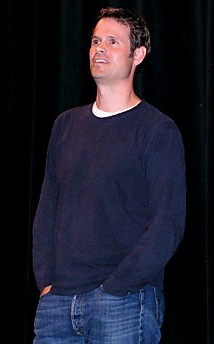
The passion that people feel for Pandora is remarkable, especially since the company engages in little to no overt marketing. Here are CNET's impressions of a user meeting that Pandora founder Tim Westergren recently led.

Retail Therapy

Market Insight has launched a product advisor for notebooks and tablet PCs. Using this Web site, you can weigh various preferences against each other to determine the right computer for you. Market Insight also offers product advisors for cars, cell phones, digital cameras, PDAs, and TVs. Check it out!

Geezer Pleasers

Newsweek profiles Pandora in its latest issue.

Pandora works by asking you to pick your favorite artists and then programs a radio station for you. You can tweak the selections by giving thumbs up or down to a tune (when a Ratt song stuck its snout into a session, I exterminated it quickly) or by adding a new artist to the mix. One of the songs may well introduce you to a great band you never heard of—or it may expose the fact that you have a recessive musical gene for something completely unexpected. Westergren sometimes gets searing missives from rock snobs who are outraged that Pandora had concluded they might like Céline Dion. ("It's a social objection," he says. "So what if she's doing Las Vegas—she can sing!") The ad-supported site went public last November, and Westergren says he has more than 2 million users.

Open Season on Open Source Apps

The Picky VC takes on open source applications. Once again, he lets the chips fall where they may ...

At the risk of incurring the [wrath of] those who have already placed bets on the near-term successiirgk of open source enterprise apps, I'd like to point out a few structural impediments to near-term mass adoption of these "products." Oops, did I upset the open source purists by calling them products instead of "projects?" Well, I hope they are products, since the CIO does not want to buy your cool work in progress.

Is the Trend Google's Friend

Google Trends is another fascinating addition to Google's quiver. My search produced a couple of interesting results: interest in the search term "venture capital" has declined over the last two years; in fact, the very trendy "Web 2.0" eclipsed it in December. But Google has not had a "hit" in a long time. As Business Week points out in its July 10th edition, "An analysis of some two dozen new ventures launched over the past four years shows that Google has yet to establish a single market leader outside its core search business, where it continues to chew up Microsoft and Yahoo." Does Google need a hit? With a market cap of $122 billion, quarterly revenues in excess of $2 billion, and net profit margins of 26%, maybe not. But the media and Wall Street seem to expect something more from Google than better search: Google is now seen as a media company. In the media business, when a company releases a number of properties that fail to garner consumer interest, its stock suffers. One wonders if Google's disappointing record with new consumer applications will soon catch up with it.